A Sunday picnic sounds simple enough until Stan Laurel and Oliver Hardy are the ones organizing it.
For nearly a century, the timeless cinematic magic of Laurel and Hardy has anchored itself in the sublime art of escalating disaster.
Their 1929 short film Perfect Day stands as a crowning achievement of pre-code physical comedy, capturing a suburban domestic expedition that goes thoroughly off the rails before it even leaves the driveway.
At its core, the film explores the universal frustration of trying to orchestrate a peaceful day off amidst a symphony of minor inconveniences and major blunders.
The morning begins with high hopes and domestic tranquility, though that illusion shatters almost immediately.
Stan and Ollie are eager to treat their wives and extended family to a delightful countryside outing, armed with wicker baskets, heavy coats, and an endless supply of optimism.
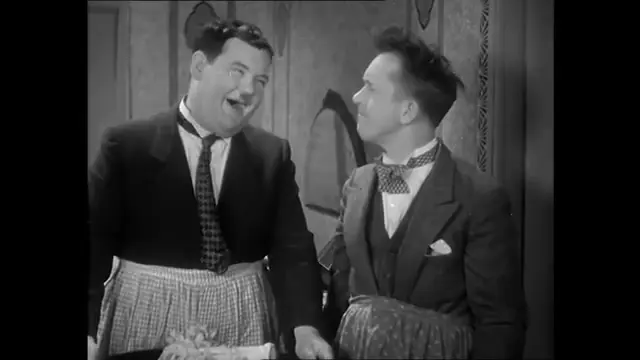
However, the preparation itself turns into a grueling gauntlet of slapstick choreography.
Every simple task becomes a monumental hurdle, masterfully paced by director James Parrott to maximize the agony and the audience's delight.
As the family prepares for the excursion, Uncle Edgar emerges from the house nursing a severely bandaged foot due to gout.
His agonizing hobble sets a precarious tone for the afternoon, adding pure frustration to an already doomed family trip.
Uncle Edgar struggles with his painful condition while trying to get ready for the outing, only to immediately step right into a fresh hazard and lose his balance.
It is a classic comedic setup where physical vulnerability meets immediate misfortune, eliciting winches and chuckles in equal measure.
Meanwhile, Stan and Ollie face their own mechanical nemesis in the form of a stubbornly flat car tire.
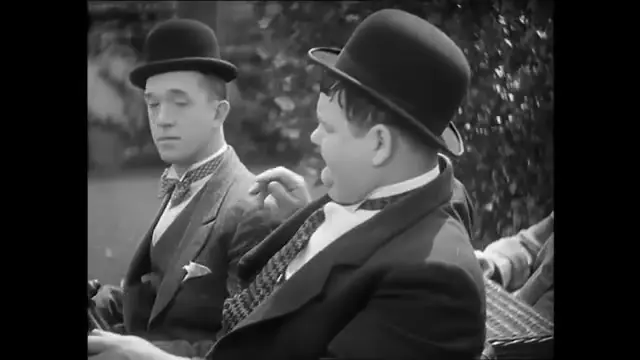
While trying to fix the flat tire for their Sunday picnic, Stan Laurel clumsily swings a heavy car tool and strikes Oliver Hardy directly on the head.
The impact triggers a ringing comedic sound effect, a hilarious cartoonish empty metal clang that catches everyone by surprise and leaves Ollie reeling.
It is moments li,ke this that cement the dynamic between the duo: Stan's innocent, wide-eyed bewilderment paired with Ollie's slow-burn exasperation and direct glances at the camera.
Their chemistry relies not on sharp verbal wit, but on an unspoken rhythm of catastrophe where every solution breeds a worse problem.
With the tire supposedly mended and tempers already simmering, the arduous task of loading the vehicle begins.
The entire family tries to squeeze into their tiny Model T car while dealing with chaotic neighbor goodbyes and mounting frustration.
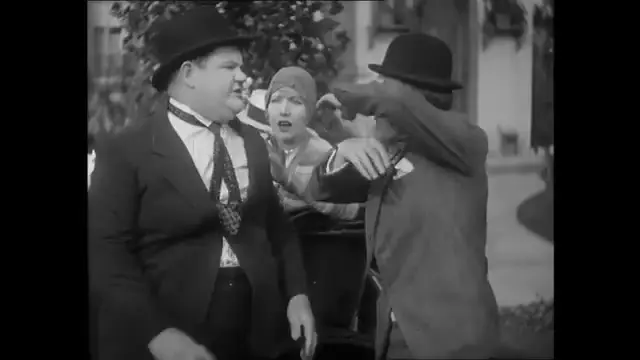
Stan, Ollie, their wives, and Uncle Edgar attempt to load themselves and all their picnic supplies into a cramped vehicle amid awkward neighborhood farewells.
Bodies, baskets, and bulky coats pile on top of one another in a seemingly impossible geometric puzzle of suburban despair.
Neighbors gather to watch the spectacle, offering unsolicited advice and polite farewells that only heighten the claustrophobic tension of the cramped automobile.
Just when it appears that every limb has been tucked inside and every basket secured, another minor crisis erupts, forcing everyone to shuffle and reshuffle.
The sheer absurdity of stuffing so many people and provisions into a compact Model T highlights the middle-class domestic ambitions of the late nineteen-twenties, stretched to their absolute breaking point.
Yet, the true climax of frustration arrives the very second the journey finally begins.
After a grueling struggle to finally get moving, the car instantly sinks into a deep muddy puddle right outside their street.
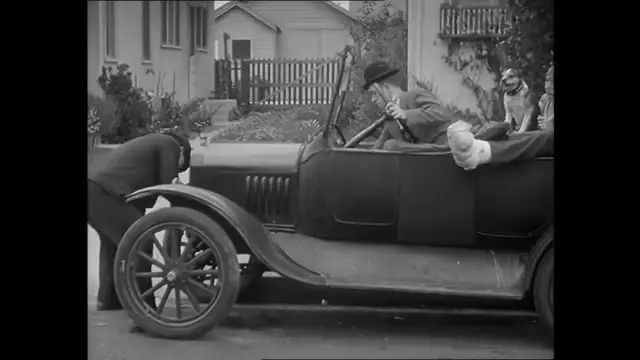
Just as the group thinks their journey has finally begun, their car drives straight into a massive hidden pothole and sinks deep into the water.
The abrupt halt erases all the hard-earned progress of the morning in a single, splashy indignity.
Ollie's face sinks into an expression of utter defeat, while Stan offers that signature, helpless scratch of the head that acknowledges the universe has conspired against them once again.
Perfect Day endures because it captures the essence of human optimism colliding with merciless reality.
Long before modern sitcoms perfected the art of the cringe and the snowballing disaster, Laurel and Hardy mapped out the blueprint with nothing more than a stubborn car, a bad foot, and an unfortunate metal tool.
Nearly a hundred years later, watching them grapple with the inevitability of chaos reminds us that sometimes, the destination doesn't matter nearly as much as the glorious wreckage it takes to get there.
Watch full video here: